Hi, I'm Patrick. I build AI systems that automate and improve how businesses run.

Marketing, support, operations, and the software process itself. From 0→1.

Work

AI systems in production, recent first

Blended Sense
Operations · 2025–26

AI across the whole company

I rolled out Claude for Teams at Blended Sense and gave it two kinds of company knowledge: live production data through an MCP server, and a second brain built from customer and creative calls and emails. Every team can pull reliable numbers, build agentic workflows and service customers with the full history in hand.

10 seats across engineering, marketing, finance and operations, all working from the same live data instead of one-off SQL pulls.

The rollout

  • Set up and run the Claude for Teams workspace: seats, connectors and shared projects per department
  • Work with each team to find the repetitive work worth handing off

The data layer

Everything important lived in the production database, and getting a number or a client report meant someone (usually me) writing SQL and building a spreadsheet. I built typed tools for film session analytics, orders and deliverables, exposed over MCP on the same Postgres that runs Studio, the ops platform I architected. Every seat in the workspace gets them.

The second brain

I built a knowledge base from our phone calls and emails with customers and creatives (the videographers we work with). Now when someone services an account or a creative, they and Claude can pull up past conversations, preferences and decisions instead of relying on whoever remembers.

What it unlocks

  • Reliable answers about orders, film sessions and deliveries, straight from production
  • Agentic workflows that chain those tools, like building a client's delivery report on request
  • Automations that run on company context instead of hand-maintained exports
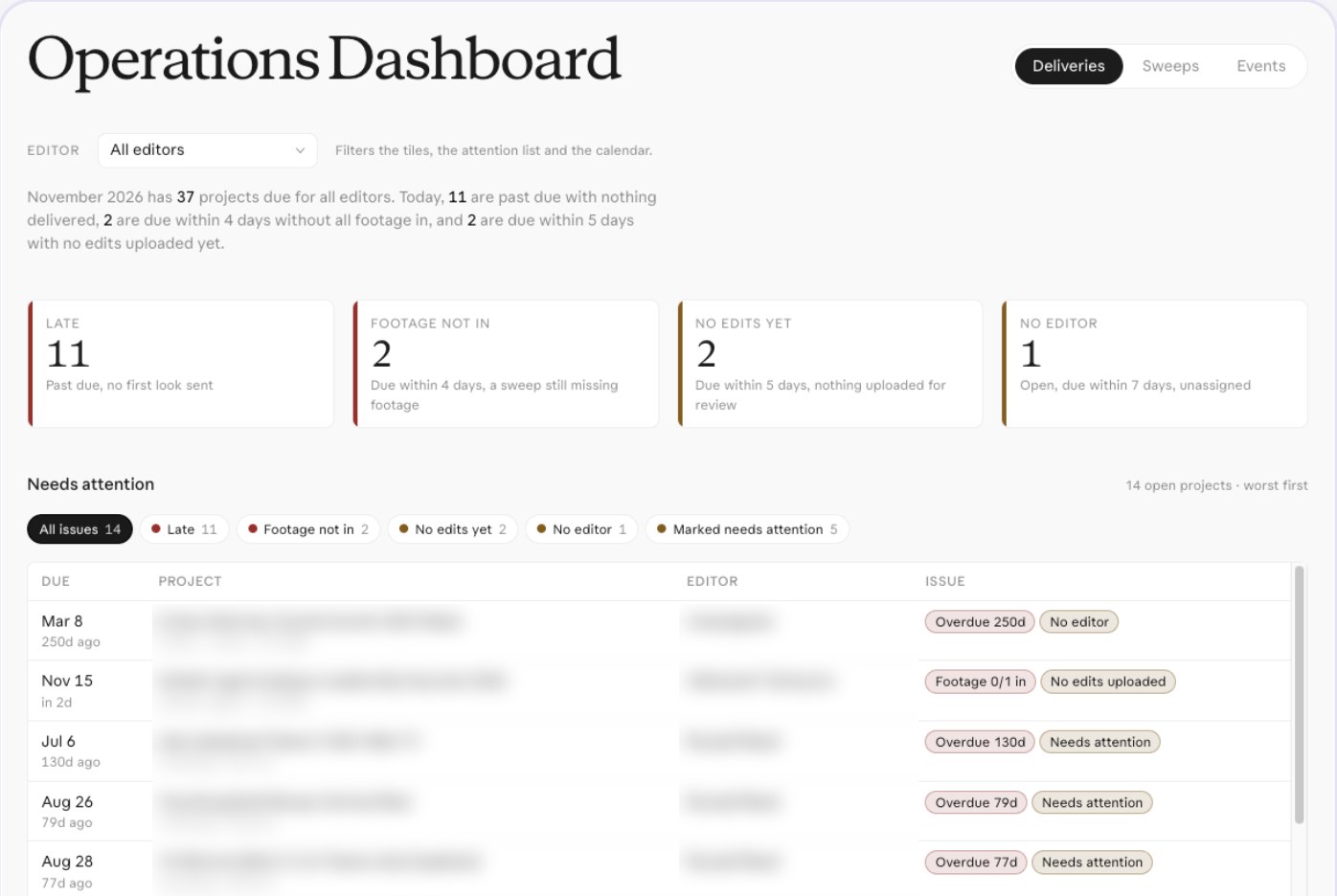
  • Dashboards like the operations view, which flags late projects, missing footage, edits not started and unassigned work
Claude for TeamsMCPSecond brainPostgresPrisma
Blended Sense operations dashboard: late projects, missing footage, edits not started and unassigned work, with a needs-attention list
Operations dashboard on the same live data (client names blurred)
LeagueSquare
Software · 2026

A one-person software factory

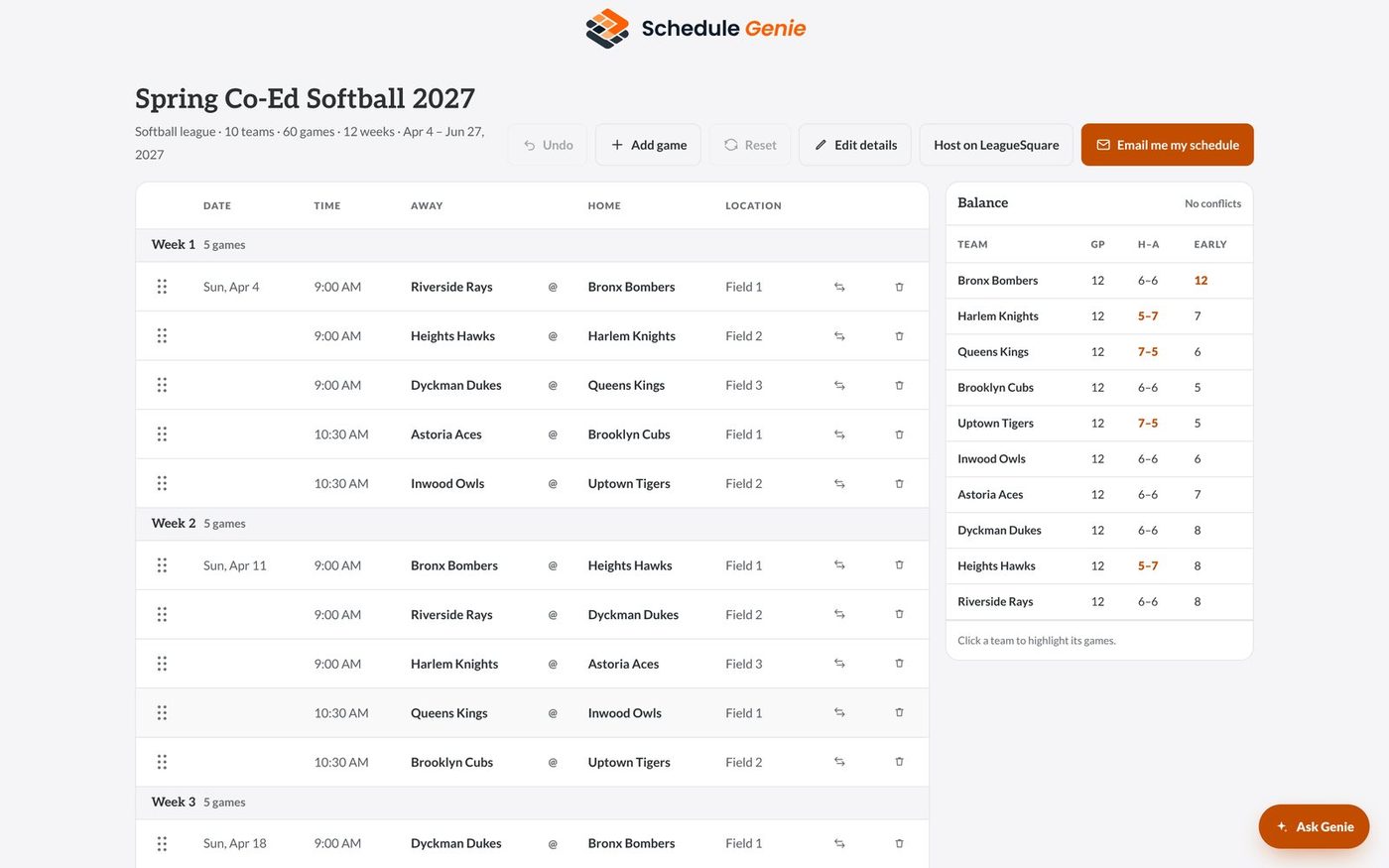
League management, live streaming and now Schedule Genie, where you describe a league in plain words and get a full schedule back. Behind it, a software factory turns user feedback, bug reports and session data into shipped fixes every day.

20+ leagues on a platform built and run by one person.

The setup

A daily job reads customer feedback, bug reports and PostHog session analysis and turns them into tickets. Coding agents triage and spec each one with design proposals, which I vet and approve; then they implement, QA and queue the fix. Nothing ships until I approve it. That's how one person ships scheduling, scoring, registration, stats and streaming.

Recent

  • Schedule Genie takes a plain-language description or an uploaded file and builds the season or tournament schedule. Launching December 2026
  • Instant clips on Mux, tied to scorekeeping so plays can be pulled by at-bat or inning
  • Mobile app in progress (Expo / React Native)
Claude CodePostHogTypeScriptFirebaseMux
A season schedule generated by Schedule Genie
Schedule Genie
LeagueSquare
Marketing · 2026

Social media that runs itself, with me approving

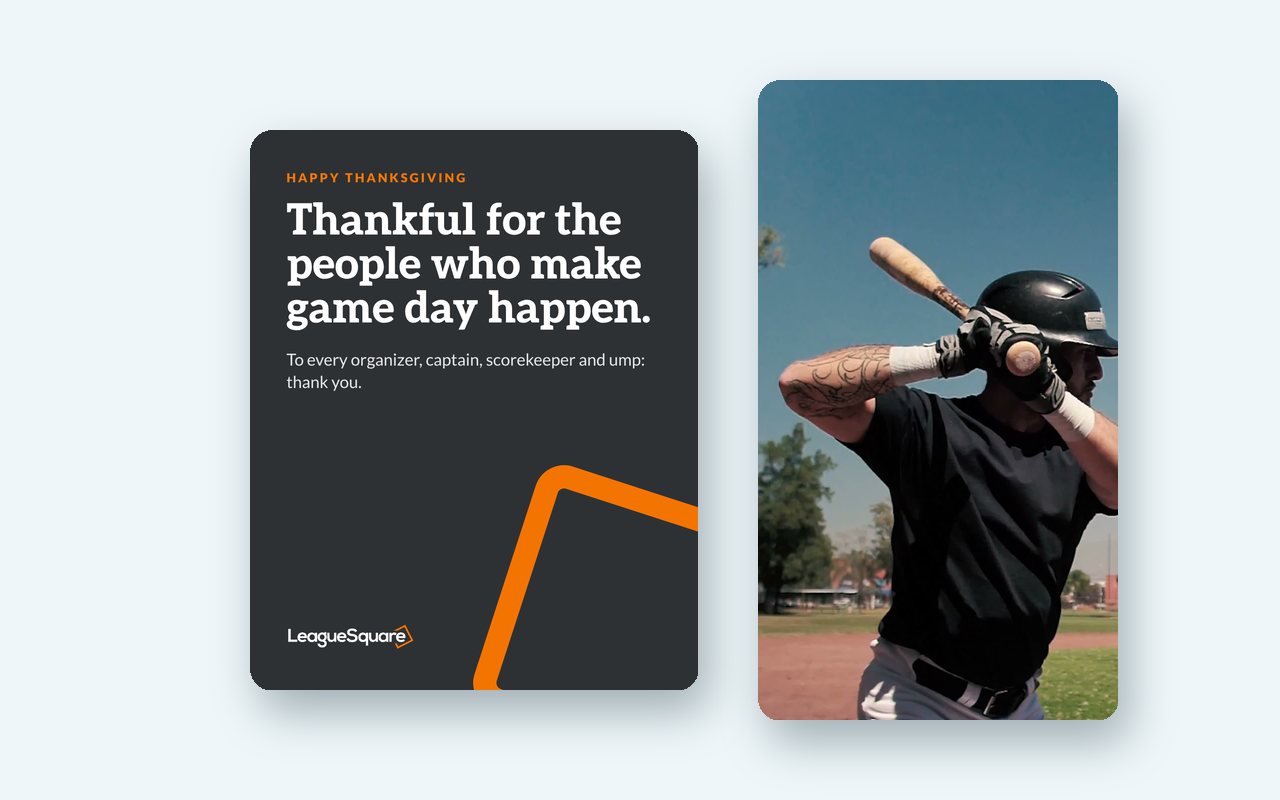
A system that handles LeagueSquare's whole social side: it plans posts around what's actually happening, makes the graphics, reels and captions, and schedules them to Instagram and Facebook once I approve.

How it works

  • A content calendar ties posts to real moments: product launches like Schedule Genie, holidays and league milestones
  • It makes the assets: on-brand graphics, and short reels built from real screen recordings of the product
  • Captions in LeagueSquare's voice, sized and formatted for each platform
  • Nothing goes out until I approve it; approved posts are scheduled through Buffer

Where it started

Earlier in 2026 I built the first version for a New York softball league: weekly recaps and previews written from live results, laid out in the league's Canva templates and published to baslnyc.com and Instagram.

Status

Early, and I'm still refining it, but it's already publishing posts and keeping a queue ahead.

Claude skillsScheduled tasksGoogle DriveBufferCanva
Two LeagueSquare posts the system made: a Thanksgiving graphic and a Schedule Genie reel
Posts it made: a holiday graphic and a Schedule Genie reel
Juntos Consulting
Client work · 2026

Website, bookings and CRM for a dance educator

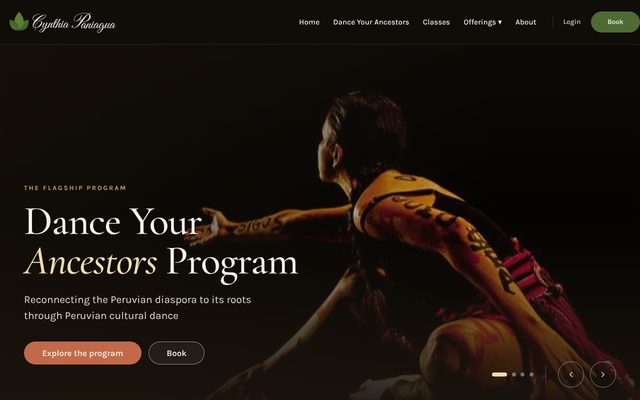
A new site for Cynthia Paniagua, a New York dancer and cultural educator who teaches Afro-Peruvian and Andean dance, wired to her CRM so classes, payments, inquiries and course access run on their own.

launched September 2026; every class booking runs on a payment link and every inquiry lands in her CRM, not an inbox.

What I built

  • Designed and built the site in Webflow, centered on her Dance Your Ancestors program and its trips to Peru
  • Classes with different prices and venues each get their own payment link, wired to the Book button on each class
  • Contact form to CRM: each inquiry becomes a contact and a conversation in her CRM, and she gets an alert
  • Course access for her cohorts through a branded membership portal
  • Domain and DNS moved over from her old Wix setup

The AI angle

I connected her CRM (a white-labeled GoHighLevel) to Claude through the HighLevel MCP server. When something breaks or she has a question, I can look up contacts, conversations and payments directly instead of digging through menus.

WebflowGoHighLevelZapierMCPClaude
Cynthia Paniagua's website homepage, featuring the Dance Your Ancestors program
cynthiapaniagua.com

Products

Live apps I designed, built and run

Systems

What I build, and where to see it

Same pattern every time: give a model the right tools and company context, run it on a schedule or behind a question, and keep a person where judgment matters. Pick a system to see where it runs.

Model + tools + context + a person to approve OperationsMarketingSupportSoftware

InOut

How I work

The model is the easy part

  1. Map it

    Sit with the people doing the work. Find what they copy, paste and chase.

    Process map
  2. Design it

    Process flows and wireframes, tested with users before anything is built.

    Tested wireframes
  3. Build it

    End to end, with agents doing the volume and me owning the architecture.

    Working system
  4. Run it

    Logging, grading and fixes after launch, so it stays trusted.

    Logs, grades, fixes

About

Engineer, designer, product lead. Usually all three at once.

Patrick Ramos
Patrick RamosAI Engineer · Product Builder · New York

I've spent my career at startups as the person who can design it, build it and run it: engineer, designer and product lead, often in the same week. I led product and tech at a Capital Factory Startup of the Year.

Lately that means building with AI at the center, from the first sketch to the shipped product.

15+
years shipping products at startups
$1B
valuation at Orchard, where I was hire #4 and built the underwriting tool
Daily
user feedback turned into specs, code and shipped fixes by the software factory I run

Experience

15 years of shipping, recent first

Full resume

Want to get in touch?
Drop me a line!

Building something with AI, or want help with a system like these? I'm always up for a conversation. New York based.

ramos.patrickm@gmail.com Resume LinkedIn Copied